
Why we learn our songs by ear at Women Rockin' Harmony Choirs®
- Tanya Lawrence

- Oct 23, 2025
- 3 min read
Every once in a while, we have people come along to our new members’ events
who have previously sung in choirs where reading from a score was the norm
during rehearsals. When they discover that our members learn all our songs and
harmonies by ear, they can find this a little unsettling. In fact, some decide not to
join us because they feel that my teaching approach takes them too far out of their
comfort zone.
I think that’s a great shame, because while reading music is a very useful skill,
there are so many cognitive, confidence, and social benefits to be gained from
learning by ear.
As a music teacher, I’ve always placed emphasis on sound before symbol -
meaning I’ll often teach a new phrase, rhythm, or chord voicing before showing
how it would appear on paper. This approach allows students to fully absorb the
musicality of what they’re learning. It also helps them build a “vocabulary” of
musical devices, such as cadences and chord progressions - rather like learning
how grammar and syntax influence how a story is received by a reader or listener.
After all, written music is simply a way of conveying ideas from one mind to
another. In much the same way that the map is not the territory and the recipe is
not the cake, the score is not the music.
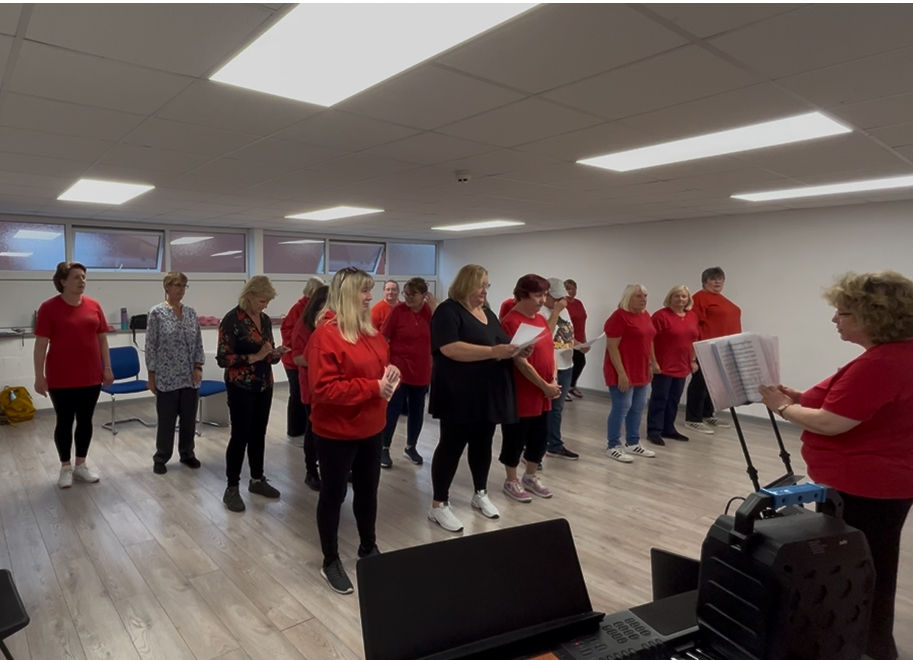
During full choir rehearsals, I often create warm-up exercises based on a harmony
or rhythmic passage from a new song. I might have singers swap parts, so
everyone can appreciate the arrangement “from all angles,” as it were. Then we’ll
listen to a recording of the song and listen out for where that particular musical
device appears. This helps to build confidence - especially among those who are
new to ensemble singing or who may underestimate their own musicality.
Not everyone has the same level of musical literacy. Someone who can accurately
read a single vocal line may not have studied harmony or developed an
understanding of chords and progressions. And since our brains have limited
capacity for multitasking, it’s difficult to appreciate what the rest of the choir is
doing when all your attention is focused on reading from the page and monitoring
your own sound. The collective musical effect can easily be lost. A choir is a team,
and it should breathe and move as one.
So while I always encourage adults to learn to read music at a basic level, I
believe it’s most useful when practising at home or working in sectional rehearsals - rather than sight-reading during full-choir sessions. That’s why, in addition to providing recordings of each part, I always include sections of rote learning in our rehearsals and encourage singers to attempt them without a score or lyric sheet early on. This strengthens memory and builds confidence as we move towards public performances.
Audiences don’t come to admire your music-reading skills - they come to enjoy
the music and connect with your performance. It’s much easier for singers to make
that connection when they’re confident and smiling outwards, rather than
panicking inwardly about whether they’ll remember everything without their folder
in front of them.
As I mentioned at the beginning, there are also multiple cognitive and social
benefits to learning songs by ear in a choral setting. I’ll expand on those in a
future post - perhaps even with insight from Jackie, our Marketing and
Administrative Director, on how this approach feels from within the ranks.



Comments